
Picture this: the morning is just beginning, the sun has barely risen, yet for many children with special educational needs that first moment of the day can feel overwhelming. The uncertainty of what comes next may trigger anxiety long before school even starts.
How To Structure Mornings and Evenings
This is why developing a simple, predictable routine at home is not simply helpful, it is essential. In many homes where access to specialised support may be limited, routines become the child’s anchor, offering calm, confidence, and readiness for learning.
Start by organising predictable mornings and evenings. Something as common as a phone alarm can help with transitions such as waking up, breakfast, brushing teeth, and preparing for school.
At DEED SEN Inclusion, we encourage parents to use alarms and timers intentionally because they help reduce the stress of guessing what comes next. Pairing these with visual schedules such as laminated picture cards on a wall or fridge gives the child a clear understanding of the day’s steps.
This clarity supports independence, especially when professional support is irregular or expensive.
Visual Schedules and Home Organisation for Smooth Transitions
Many parents do not realise the power of visual schedules until they try them. One parent used simple images printed from the internet, laminated them at a business centre, and arranged them on the wall to guide his daughter’s daily activities.
Instead of repeating reminders many times, he could simply point at the picture. She understood immediately. Visual schedules reduce confusion and arguments, particularly for children who learn best through images.
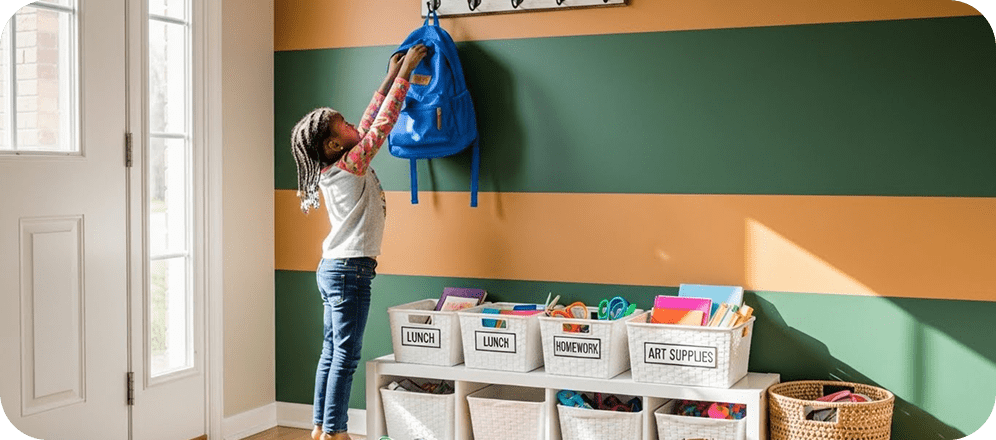
In addition, small home organisation habits such as labelled baskets for toys, a school corner near the door, or a fixed place for shoes help the child know where things belong. These simple habits reduce morning stress and bring a sense of order to the day.
Reinforcing Classroom Strategies at Home Through Consistency
Teachers often observe that progress increases significantly when families continue school strategies at home. For example, a child with a speech delay made remarkable progress after his parents began using the same picture cards and reward system used in his classroom.
He was not navigating two different worlds. Home and school were speaking the same language. Whether your child uses visual prompts, behaviour charts, sentence starters, or token rewards, continuing these strategies at home builds familiarity and structure.
Consistency nurtures confidence and confidence builds independence.
Creating a Learning Friendly Space
At DEED SEN Inclusion, we emphasise the importance of organising the physical environment at home. A calm corner or a small quiet space can help your child regulate when they feel overwhelmed. Decluttering, reducing noise, and keeping this space predictable gives them a safe place to rest and reset.
Conclusion
Strengthening home routines by aligning them with school strategies supports learning and emotional stability. If teachers use token boards, reward charts, or emotion prompts, try creating similar tools at home. Over time, these routines combined with visual cues and sensory support create a gentle structure that helps your child feel calm, confident, and prepared to learn.
At DEED, we work closely with each learner to understand how they learn best. Our assessments and personalised support plans build confidence, independence, and measurable progress. We also support schools by strengthening their inclusive practices so learning becomes accessible to every child.